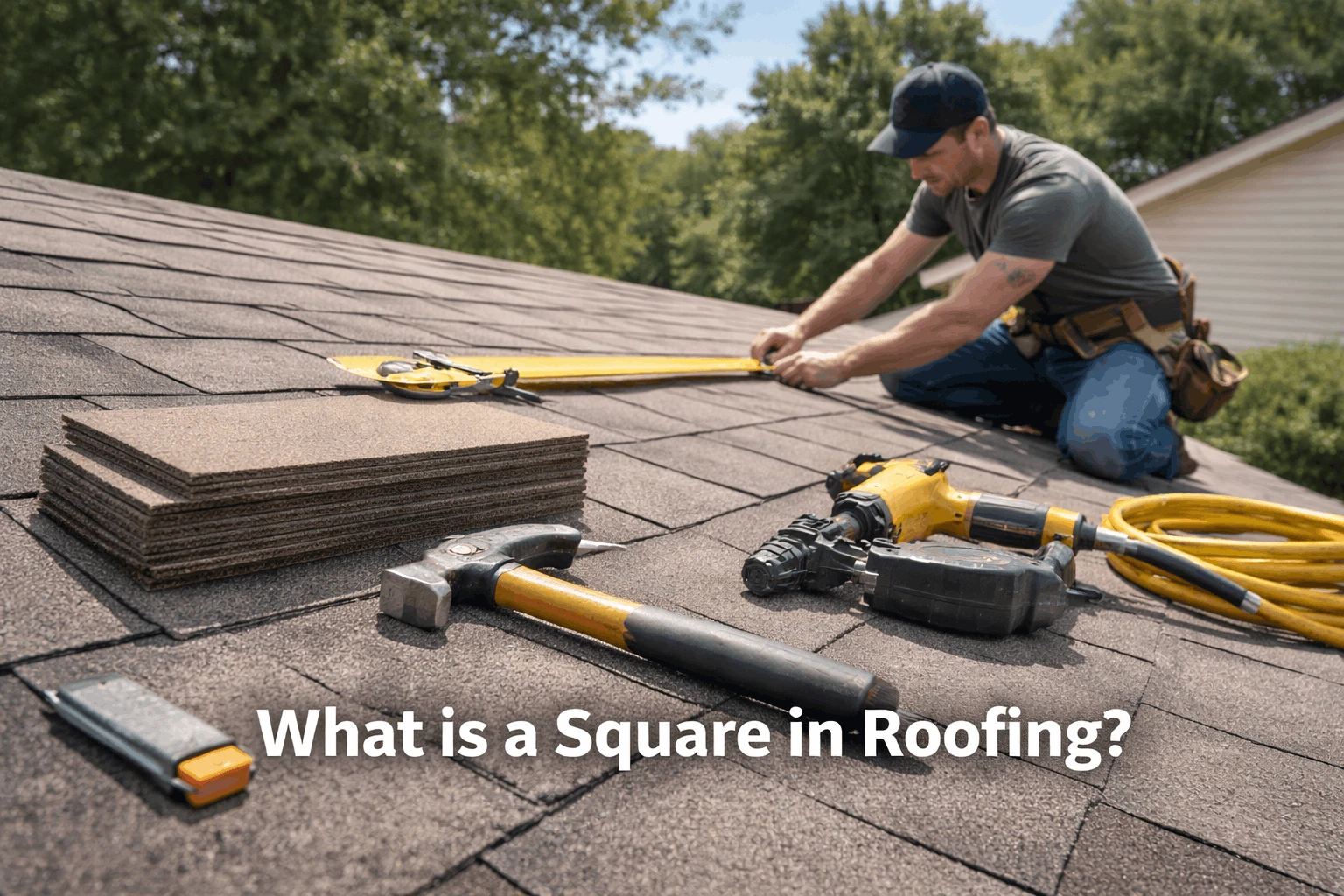
If you are getting an estimate for a new roof or ordering materials, you will hear the term “square” constantly. Unlike standard home improvement projects that use square feet, the roofing industry operates on its own scale to simplify high-volume measurements.
What is a Square in Roofing Terms?
In roofing, a square is a unit of measurement equal to 100 square feet of roof surface. Specifically, it represents a 10-foot by 10-foot area. This standard unit allows contractors, insurance adjusters, and manufacturers to calculate material needs, labor costs, and shipping weights more efficiently than using large square footage numbers.
Why Roofers Use “Squares” Instead of Square Feet
Roofing projects often involve thousands of square feet. Using “squares” reduces the complexity of the math. For example, a 2,500-square-foot roof is simply referred to as a “25-square” roof. This shorthand helps prevent clerical errors during the bidding process and ensures that everyone—from the supplier to the installer—is on the same page.
What is a Square in Roofing Shingles?
When you are buying materials, “square” refers to the amount of shingles needed to cover that 100-square-foot area. However, shingles are rarely sold in single “square” boxes because they would be too heavy to lift.
- Bundles per Square: For standard asphalt shingles, it typically takes 3 bundles to equal 1 roofing square.
- Weight Considerations: A single square of shingles can weigh anywhere from 150 to 240 pounds, depending on the thickness and quality (architectural vs. 3-tab).
- Coverage: While one square of shingles covers 100 square feet of the roof, you must account for “exposure”—the part of the shingle actually visible to the weather.
Calculating Your Roof: Squares vs. Square Feet
To determine how many squares your home requires, you first find the total square footage of the roof and divide by 100.
| Total Square Footage | Total Roofing Squares |
| 1,000 sq. ft. | 10 Squares |
| 1,500 sq. ft. | 15 Squares |
| 2,200 sq. ft. | 22 Squares |
| 3,000 sq. ft. | 30 Squares |
The “Waste Factor” in Measurement
In roofing, a square in measurement doesn’t always equal a square in materials ordered. You must account for the Waste Factor, which covers:
- Valleys and Hips: Areas where shingles must be cut to fit angles.
- Starter Strips: The initial row of shingles at the eaves.
- Ridge Caps: The shingles that cover the peak of the roof.
Expert Tip: Most professional contractors add a 10% to 15% waste factor to the total “square” count to ensure they don’t run out of materials mid-job. If your roof has a complex design with many gables, that waste factor may increase to 20%.
What is Not Included in a Standard Roofing Square?
It is a common misunderstanding to assume that “one square” of a roofing estimate covers everything. Usually, the “square” price in a contract refers specifically to the field shingles. Below is a list of items often billed separately or added to the per-square labor cost:
- Underlayment: The water-resistant barrier installed beneath the shingles.
- Flashing: Metal pieces used to divert water away from chimneys and dormers.
- Ventilation Hardware: Ridge vents or “turtle” vents.
- Debris Removal: The cost to haul away the old “squares” of torn-off roofing.
Selecting the Right Roofing Specialist
When the time comes to replace your roof, only an experienced contractor who provides a detailed “per square” breakdown should be trusted. Accurate measurement is the foundation of a fair price. By understanding the math behind the materials, you can ensure your home is protected without overpaying for ghost inventory.
Once you understand how your roof is measured, the next step is choosing a material that pays off. Explore our guide on Types of Metal Roofing: Which One Actually Lasts? to find the best long-term ROI for your home.