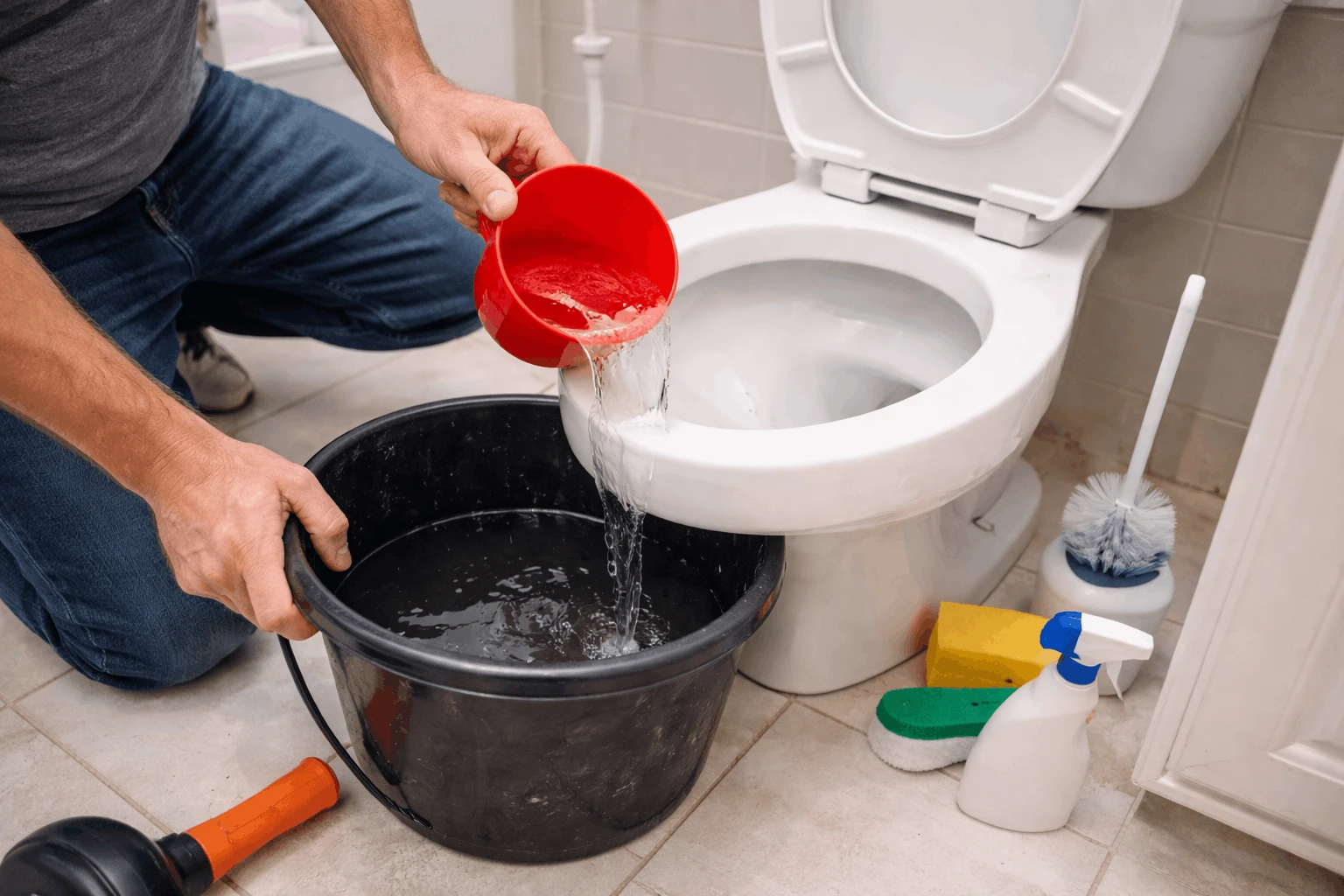
The fastest way to drain a toilet bowl is to shut off the water supply and flush it, then remove the remaining water manually. First, turn the shutoff valve (usually behind the toilet near the floor) clockwise to stop water flow. Then flush the toilet – this will empty most of the tank and bowl. With the water supply off, no new water will refill, so you can safely bail or soak up the leftover water. Draining the bowl lets your cleaner reach hidden stains under the normal waterline. Follow these steps for a thorough, DIY bowl drain-and-clean process.
Gather Supplies
Before you begin, have these common household items on hand:
- Rubber gloves: Protect your hands from germs and cleaning chemicals.
- Bucket or large cup: For scooping out water from the bowl. A paint bucket or empty plastic cup works well.
- Sponge or old towels: Absorbent towels or a sponge will soak up the final bit of water.
- Plunger (optional): A clean plunger can create suction to help pull water out of the trap. It’s not required, but it can make removing water easier.
- Wet/dry vacuum (optional): If you have a wet-vac, it can suck out every drop of water (only if it’s rated for water use). A turkey baster or small hose can also work for hard-to-reach spots.
Turn Off the Water Supply
Locate the shutoff valve on the wall or floor behind your toilet. Turn it clockwise until it stops – this stops water from refilling the bowl. If your toilet has a quarter-turn ball valve, a 90° turn will do. Always make sure the valve is fully off. If you can’t find a local valve, you may need to shut off the main water supply. Closing the valve is crucial; it keeps water from flowing in while you work.
Flush to Drain the Tank and Bowl
With the water supply off, flush the toilet. The tank will drain and the bowl water will rush into the drain. Hold down the flush lever until most of the water has emptied from the tank. You will hear and see most of the water go down. Because of the toilet’s trap design, a bit of water will remain in the bowl even after flushing. This small water seal prevents sewer gas from coming up, but it must be removed for deep cleaning.
Remove Remaining Water
Once flushed, deal with the leftover water as follows:
- Scoop out the water: Use your bucket or cup to bail out as much water from the bowl as you can. Carefully transfer the water to another drain or toilet (or into the bucket for disposal) until the bowl looks almost empty.
- Plunge to suction out water: If some water still sits in the trap, place the plunger over the drain hole and push down then pull up repeatedly. The vacuum action will draw more water through the U-shaped trap. Continue plunging until no more water is drawn up. If water starts to rise instead of go down, stop – that may indicate a clog issue.
- Sponge up the rest: For the last few drops, press a sponge or folded towel into the bowl bottom. It will soak up any lingering water. Wring the sponge into your bucket and repeat until the bowl is nearly dry.
Once the bowl is emptied, you can scrub it thoroughly. After sopping up the water, apply your toilet cleaner and use a brush to clean under the rim and inside the bowl. The image above shows scrubbing the bowl – with the water removed, cleaning solutions and brushes reach all areas more easily. Leave the cleaner on a few minutes if needed, then scrub away stains and mineral deposits.
Finish Cleaning and Refill
With the bowl drained, clean normally: apply toilet bowl cleaner under the rim and use a toilet brush to scrub every surface. The lack of water helps cleaners break down stains better. Once you’ve scrubbed thoroughly, turn the shutoff valve counterclockwise to restore the water flow. Flush the toilet to refill the bowl and rinse away any residue. Use the towels to catch any drips as the bowl refills. Finally, wipe down the outside of the toilet and handle with disinfectant for a fresh finish.
Tips for a Safe, Effective Clean
- Stay safe: Wear gloves and keep the bathroom ventilated when using cleaners. Cleaning products can have strong fumes, so open a window or run an exhaust fan.
- Don’t over-dry: Remember that a few inches of water in the bowl act as a gas seal. Once cleaning is done, refill the bowl promptly. Never leave the toilet permanently dry – it can let sewer odors in.
- Be chemical-smart: Use cleaners meant for toilets and plumbing. Harsh chemicals can damage porcelain or pipes. Avoid abrasive scrubs under the rim.
- Get professional help if needed: If your toilet has frequent clogs or still drains slowly after cleaning, it may signal a deeper problem. In that case, it’s wise to call professional drain cleaning services. Experts have the tools to clear stubborn blockages and ensure your plumbing stays in top shape.
Draining a toilet bowl for cleaning may seem odd at first, but it makes scrubbing much easier. By following these straightforward steps, homeowners can prepare the bowl for a truly deep clean without hiring a plumber. A clean, dry bowl lets you tackle every stain safely and effectively – and when all else fails, you have drain cleaning services ready to help.
If you’re tackling more home improvement tasks, you may also find our DIY flooring ideas helpful for maintaining clean, durable surfaces throughout your home.