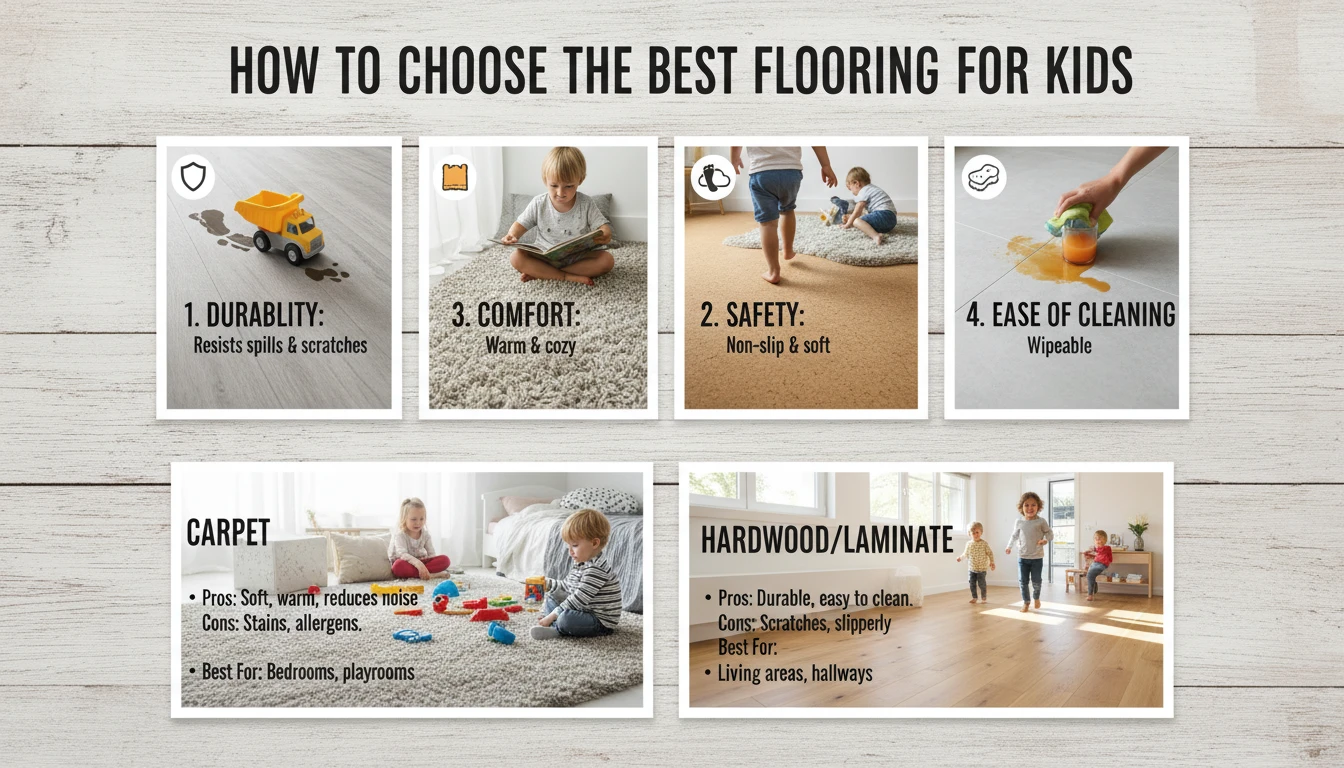
Kid-friendly flooring is defined as any surfacing material engineered to balance impact absorption, high slip resistance, and ultra-low chemical emissions. It is a specialized category that must withstand the mechanical stress of play, such as dropped toys and liquid spills, while maintaining a healthy environment for developing lungs.
Choosing the right floor for a home or a commercial childcare facility is one of the most significant investments a property owner can make. In 2026, the criteria have shifted. It is no longer enough for a floor to simply “look good” or “be waterproof.” Today’s standards require a deep dive into the chemical composition of the materials, their acoustic properties, and how they interact with the specific needs of children at different developmental stages.
Whether you are a parent designing a nursery or a facility manager overseeing a high-traffic daycare center, this guide provides a comprehensive framework for selecting a floor that survives the “Three Ds”: Dents, Dirt, and Dampness.
The Global Standards for Kid-Safe Flooring
Before looking at specific materials, it is essential to understand the regulatory and safety certifications that define a high-quality product. For global buyers, navigating these standards ensures that the flooring meets international health benchmarks.
Health and Air Quality (VOCs)
Children breathe more air per pound of body weight than adults, making indoor air quality (IAQ) critical. You must look for Greenguard Gold or FloorScore certifications. These ensure the product has been tested for over 10,000 chemicals and meets strict emission levels for Volatile Organic Compounds (VOCs).
In the United States, the CARB Phase 2 standard is the benchmark for formaldehyde emissions in wood products. In Europe and global markets, look for E1 or E0 classifications. Avoiding phthalates in vinyl and ensuring no added formaldehyde in laminates are non-negotiable health requirements for 2026.
Durability and Impact
For hard surfaces like laminate and vinyl, the Abrasion Class (AC) rating tells you how much wear the floor can handle. While AC3 is standard for residential use, households with active children or commercial play areas should prioritize AC4 or AC5 ratings. These are designed to resist the heavy friction caused by plastic wheels, dragging furniture, and constant foot traffic.
Safety and Slip Resistance
The slip resistance of a floor is measured by the Coefficient of Friction (COF) or the “R-rating.” For areas where children run, an R10 or R11 rating is ideal. This provides enough grip to prevent “sock-sliding” accidents while remaining smooth enough for easy cleaning.
Top Flooring Materials for Kids: 2026 Analysis
The current market offers several “hero” materials. Each serves a specific purpose depending on the environment and the age of the children.
1. Luxury Vinyl Plank (LVP)
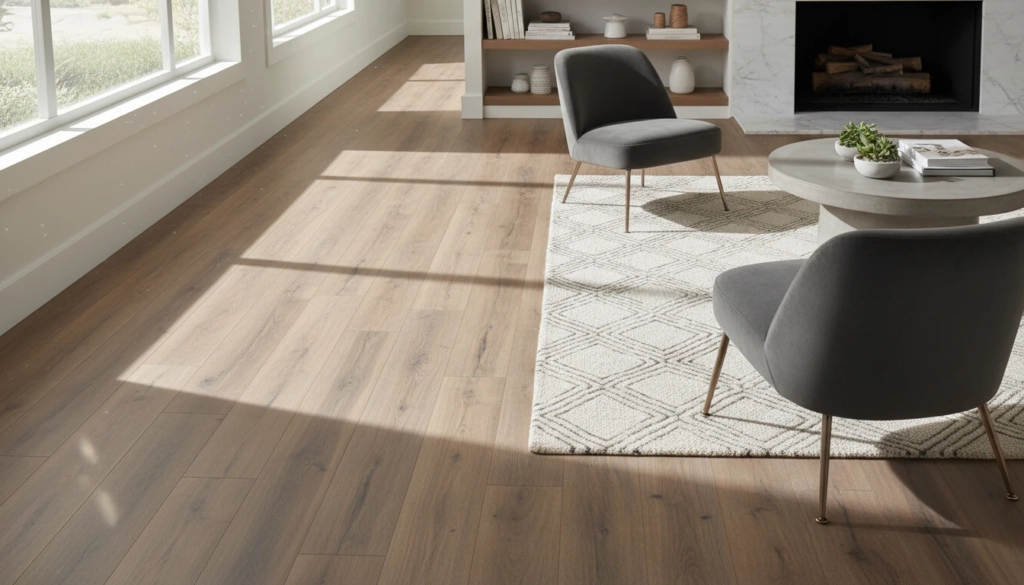
Luxury Vinyl Plank remains the most popular choice for mixed-use family homes. Composed of Polyvinyl Chloride (PVC) but now often manufactured as “phthalate-free,” LVP is the gold standard for waterproof performance.
- Why it works: It is 100% waterproof. If a juice box leaks or a bath overflows, the core material will not swell.
- The 2026 Shift: Modern LVP features a 20 mil or 22 mil wear layer, offering commercial-grade protection in a residential aesthetic. We are seeing a move toward matte, wire-brushed textures that hide scratches much better than the high-gloss finishes of the past decade.
- B2B Note: For daycares, Solid Vinyl Tile (meeting ASTM F1700 standards) provides the durability needed for heavy rolling loads and frequent sanitization with industrial cleaners.
2. Natural Cork (Quercus suber)
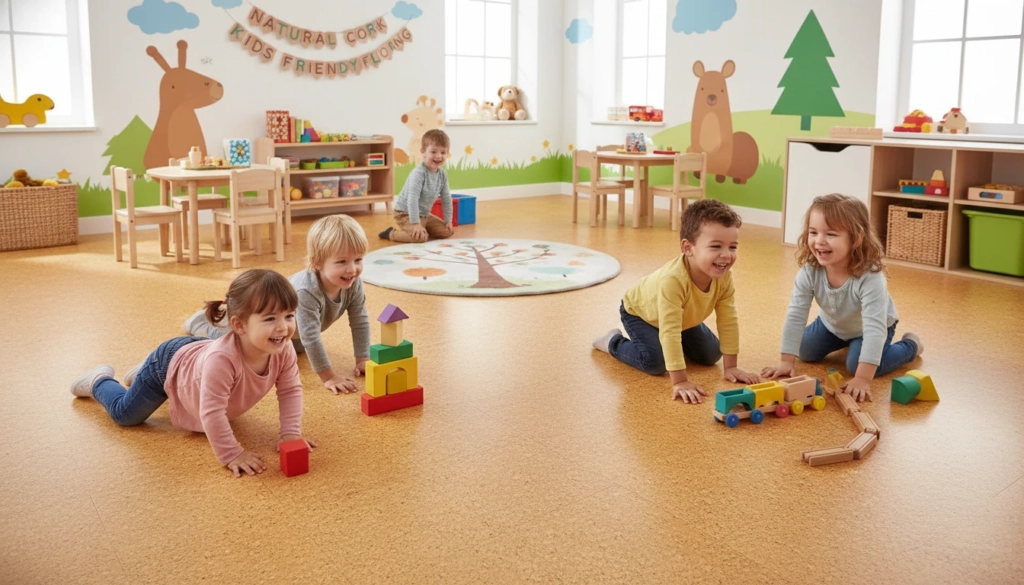
Cork is the “hidden gem” of kid-friendly flooring. Harvested from the bark of the cork oak tree, it is naturally sustainable and possesses a unique cellular structure filled with air.
- Why it works: It provides natural Impact Sound Reduction. If a child falls, the cork compresses, acting as a shock absorber. It is also naturally antimicrobial and hypoallergenic, resisting the growth of mold and dust mites.
- The Downside: Cork is softer than vinyl. It can be dented by heavy furniture or scratched by sharp toys. It requires a high-quality polyurethane finish to stay protected.
3. High-Performance Laminate
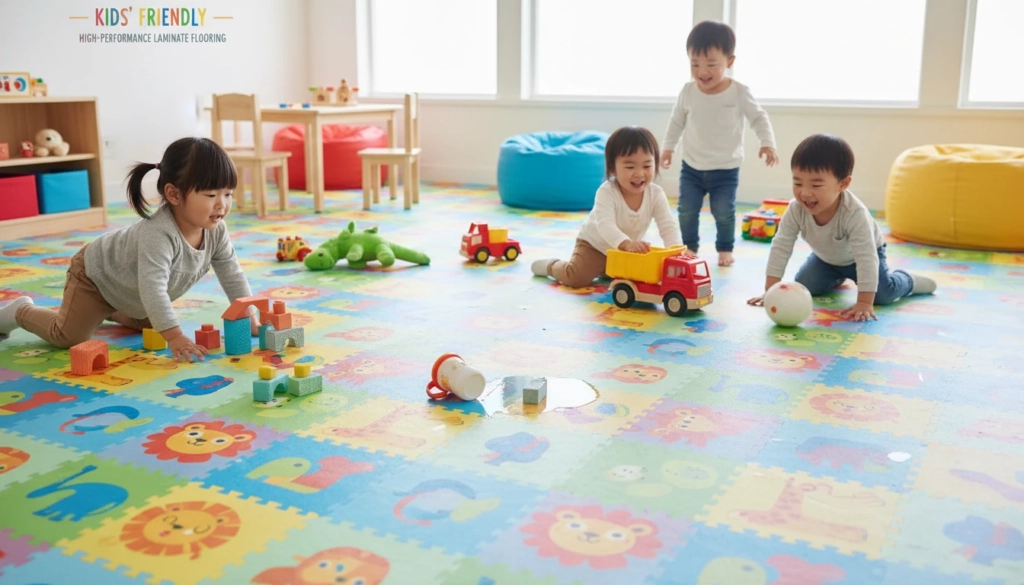
Laminate has seen a massive resurgence due to its incredible scratch resistance. Unlike old versions, 2026 laminates are often “water-resistant” for up to 72 hours.
- Why it works: It is arguably the hardest surface available. An AC5-rated laminate can withstand the claws of a large dog and the chaotic play of three toddlers simultaneously.
- The Catch: While the surface is tough, the seams are the weak point. Prolonged moisture can cause “peaking” at the edges.
4. Rubber Flooring
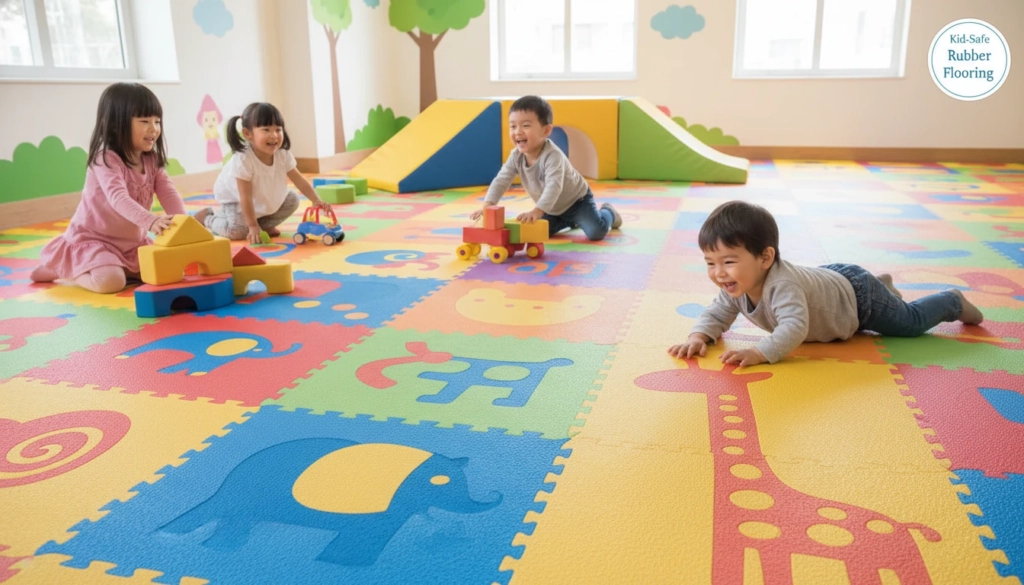
Commonly found in commercial gyms, rubber is increasingly used in dedicated home playrooms and professional childcare centers.
- Why it works: It offers the highest level of fall protection. It is virtually indestructible and provides excellent thermal comfort, meaning the floor never feels “cold” to the touch.
- Consideration: It has a distinct “industrial” look. While available in many colors, it may not fit the aesthetic of a primary living room.
Room-by-Room Selection Guide
The Nursery (Ages 0–2)
For infants, the priority is softness and air quality. Since babies spend significant time on the floor, cork or a low-VOC engineered hardwood with a large, plush area rug is ideal. Ensure the rug has a non-slip backing that doesn’t contain harmful rubber adhesives.
The Playroom (Ages 3–10)
This is a “high-impact” zone. Rubber tiles or LVP are the winners here. These rooms require materials that can be quickly wiped down after a session with crayons, Play-Doh, or spilled snacks.
The School Kitchen or Cafeteria (B2B Focus)
In commercial settings, compliance is king. Flooring must meet LEED or BREEAM standards for sustainability. Linoleum, a natural product made from linseed oil and wood flour, is a top choice for schools because it is biodegradable, extremely durable, and naturally inhibits the growth of bacteria like MRSA.
The “Pet + Kid” Overlap: The Double Threat
Many households are dealing with “paws and paws.” Dogs add the element of long claws and additional dander to the mix. In these cases, LVP and Laminate are superior to cork or hardwood. The hard wear layer prevents “nail-tracking” (the visible lines left by dogs running).
If you have pets and kids, avoid wall-to-wall carpet. It acts as a massive filter for pet dander and dust, which can trigger childhood asthma or allergies. If you must have carpet, choose low-pile modular carpet tiles that can be replaced individually if a permanent stain occurs.
The Role of Underlayment and Acoustics
One of the most overlooked aspects of kid-friendly flooring is what lies under the floor. In multi-level homes or daycares, the “thumping” of running feet can be a major stressor.
The Sound Transmission Class (STC) and Impact Insulation Class (IIC) are the two metrics to watch. A high-quality underlayment, such as high-density foam or felt, can significantly dampen noise. For the best results, look for an IIC rating of 60 or higher. This ensures that the noise from a playroom doesn’t disrupt the rest of the building.
Maintenance and the 2026 Aesthetic
The design trend for 2026 has moved away from the “cool grey” laminates of the 2010s. The modern preference is for warm neutrals, honey-toned woods, and matte finishes.
Why Matte?
High-gloss floors act like a mirror for every smudge, footprint, and scratch. A matte or “satin” finish scatters light, making the floor look cleaner for longer. This is a practical “hack” for busy parents who cannot mop every single day.
Cleaning Toolkit for Kid-Friendly Floors:
- Microfiber Mops: Best for picking up fine dust without scratching the surface.
- PH-Neutral Cleaners: Essential for LVP and Wood to prevent stripping the wear layer.
- Enzymatic Cleaners: A must-have for biological “accidents” to ensure all odors are neutralized at the molecular level.
Decision Matrix: What Should You Choose?
| If your priority is… | Choose this Material | Key Reason |
| Spills & Waterproofing | Luxury Vinyl Plank (LVP) | Total moisture immunity. |
| Allergies & Air Quality | Cork or Linoleum | Naturally antimicrobial / No VOCs. |
| Budget & Scratches | High-Wear Laminate | Hardest surface for the price. |
| Safety & Impact Softness | Rubber Tiles | Maximum fall protection. |
| Luxury & Resale Value | Engineered Hardwood | Beautiful, but needs more care. |
Frequently Asked Questions
- Is vinyl flooring safe for crawling babies?
Yes, provided it is Greenguard Gold certified and phthalate-free. Modern, high-quality vinyl does not have the “off-gassing” issues associated with older, cheaper products.
- Does laminate flooring contain formaldehyde?
Historically, some did, but 2026 standards in the US (CARB Phase 2) and Europe (E1) strictly limit formaldehyde levels. Always check the packaging for these certifications.
- What is the best flooring for a home daycare?
Linoleum or LVP are the top choices. They meet commercial safety standards, are easy to sanitize, and offer the durability needed for 10+ hours of daily use.
- Can I put a rug over vinyl or laminate?
Yes, but you must use a rug pad made of felt or 100% natural rubber. Avoid cheap PVC or plastic rug pads, as they can chemically react with the floor and cause permanent staining.
- How do I clean Play-Doh out of textured flooring?
Allow the Play-Doh to dry completely. Use a stiff nylon brush to break it up, then vacuum the debris. Avoid using excessive water, which can turn the dough back into a paste.
- Is cork flooring hard to maintain?
Not necessarily, but it requires a different approach. You should avoid wet-mopping; instead, use a damp cloth and a cleaner specifically formulated for cork or wood.
- Which flooring is best for children with asthma?
Hard surfaces like cork, linoleum, or LVP are best. They do not trap dust, pollen, or dander, which are the primary triggers for pediatric asthma.
- What is the average cost of kid-friendly flooring?
Expect to pay between $3 and $7 per square foot for quality LVP or laminate, and $5 to $12 per square foot for cork or premium linoleum.
Choosing the best flooring for kids is an exercise in balancing the “softness” children need with the “toughness” parents and facility managers require. In 2026, the market has matured to the point where you don’t have to sacrifice style for safety.
By prioritizing Greenguard Gold certifications for health, AC4/AC5 ratings for durability, and high IIC ratings for acoustics, you create a foundation that supports a child’s growth while protecting your property investment. Start by ordering samples of matte-finish LVP or cork and testing them in your space, your future, stress-free self will thank you.