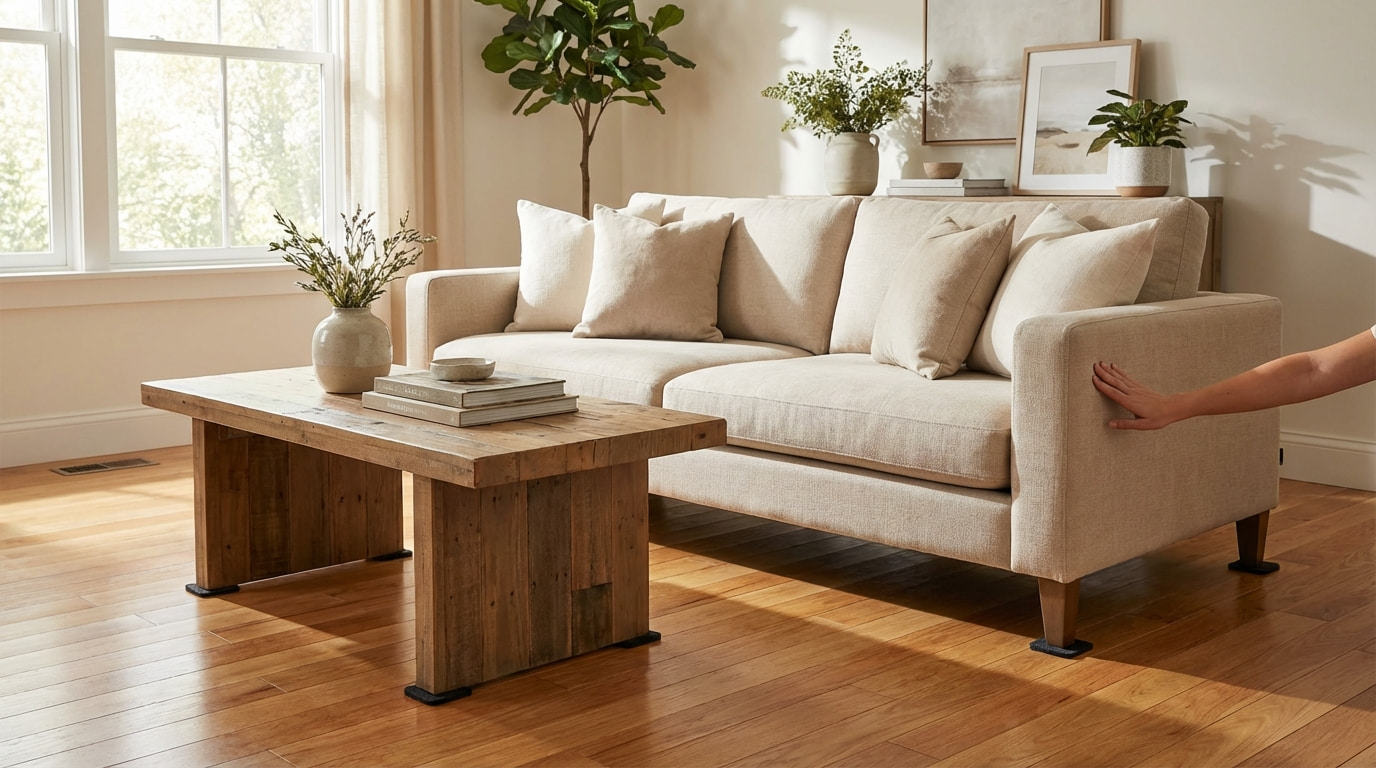
If your couch, table, or chairs keep sliding across hardwood floors, the fix is to add more grip under each furniture leg. In practice, this means sticking non-slip pads or grippers on the feet, placing rugs under furniture, or using DIY traction hacks. For example, peel-and-stick rubber or silicone furniture gripper pads attach to each leg and create a high-friction “foot” that grips the wood. Felt floor protectors work too – they won’t scratch the wood – though felt is smooth and will still allow some sliding. Other solutions include putting an area rug (with a non-slip rug pad) under the furniture, or even dabbing clear silicone caulk on each leg to form sticky little feet. All these methods boost friction so your sofa, chairs, or table stay firmly in place on the hardwood.
Top solutions to prevent sliding furniture:
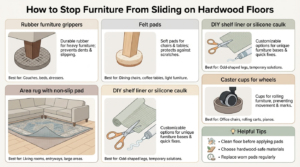
- Furniture Gripper Pads: Rubber or silicone pads that stick onto each leg and create a non-slip contact.
- Felt Floor Protectors: Soft felt pads protect the wood finish and let chairs glide, but they won’t completely stop heavy items from moving.
- Area Rugs + Anti-Slip Pads: A large rug under the furniture adds traction. Use a quality rug pad or double-sided tape so both the rug and furniture stay put.
- DIY Grips (Shelf Liner, Caulk, Tape): Cut rubber shelf liner or drawer liner into pieces for leg grips, or apply a blob of clear silicone caulk to each leg and let it dry. These homemade solutions create custom non-slip feet.
- Caster Cups & Wheels: For furniture with wheels, use rubber caster cups (little pads under each wheel) or swap in rubber-locking wheels. Rubber cups hold chairs or carts in place while softening impact.
- Clean Floors & Quality Pads: Always sweep or vacuum first – dust and pet hair make slippery floors more slippery. Clean any debris off furniture feet, too. Use high-quality, hardwood-safe pads (cheap rubber pads can stain or scuff wood). Replace worn pads so the grip stays strong over time.
Rubber and Silicone Furniture Grippers
One of the easiest fixes is to attach rubber or silicone gripper pads to each furniture leg. These come as peel-on discs or slip-on caps that fit snugly under chair, sofa, or table legs. The rubberized “foot” grips the floor so the furniture won’t slide when you sit or push on it. As one guide notes, such rubber pads “give your furniture enough grip to stay put” on wood. Most furniture grippers are small and discreet, so they don’t hurt the look of your décor.
Felt Floor Protectors
Felt pads are soft fabric discs that stick to legs to protect wood floors. They slide very smoothly, which is great for chairs and occasional rearranging because they prevent scratching. However, felt is designed to glide, so it won’t lock furniture in place. In other words, felt protectors will not completely stop heavy items from shifting. One homeowner guide warns that felt pads “will likely not fully prevent furniture from sliding as they do not provide enough friction”.
Use felt pads when you want to reduce noise and protect your floor from scuffs during normal movement (like dining chairs or bedside stools). But for bulky sofas or tables that slide on their own, rubber or silicone grippers are a better choice. You can even combine them: for example, put a felt pad on the outside of a leg (to protect the floor) and a rubber pad on the inside (toward the floor) for grip.
Area Rugs and Non-Slip Mats
Placing an area rug under sliding furniture is a simple and stylish fix. A carpet naturally grips furniture legs and boosts friction on hardwood. To really lock things down, put a non-slip rug pad or double-sided rug tape under the rug so the whole ensemble (rug + furniture) doesn’t move. This way, even if you push against the couch, the rug’s weight and grip hold everything steady.
For best results, choose a large rug. If possible, fit all the furniture’s legs on it. For example, put both front legs of chairs (and ideally back legs too) on the rug, or position all four feet of a coffee table on a rug. A deep-pile or chunky rug adds extra friction, while a thin rug still works if the pad below grips well. One source explains that a rug “provides additional friction, helping to hold items in place,” especially when secured with tape.
Be cautious on bare hardwood: a rug without a pad can still slip. Always use a quality rubberized rug pad to keep the rug from sliding on the floor. (Some rubber pads sold for rugs can also be hard on floors, so use a pad made for wood floors.) Area rugs have the bonus of adding décor to your room while preventing slips, but buying a big rug is a bigger expense. Even so, if a sliding couch drives you crazy, a rug is a proven solution.
DIY Non-Slip Hacks
You don’t need to buy fancy products – several low-cost DIY hacks work surprisingly well. One is to cut non-slip rubber shelf liner or drawer liner into squares. Slide these squares under each furniture leg as homemade gripper pads. The liner’s rubberized bottom grips the hardwood and holds the leg. This trick is cheap and customizable (you can trim it to any shape).
Another clever hack is to use clear silicone caulk. Apply a small dab of caulk to the base of each leg, let it fully dry (24 hours), and then set the furniture down. The caulk dries into a clear rubbery pad stuck to the leg. DIY home experts report that silicone caulk can be used as a “grippy substance” on anything that slides on hardwood. In practice, the hardened caulk creates friction and won’t let the furniture slide easily. (This trick is even suggested for pet beds or rugs that slide around.)
Other home solutions include double-sided carpet tape under legs (or under a rug) and pieces of rubber cutting board under trays or smaller furniture feet. These don’t last forever under heavy use, but for a quick fix they can keep things still.
Rubber Caster Cups and Grip Wheels
If your furniture has wheels or castors (e.g. an office chair, a sofa with wheels, a bed frame, or a moving table), use rubber caster cups or upgrade the wheels. A caster cup is a small round rubber or plastic dish you slip under each wheel when you want it to stay put. The wheel sits in the cup and can’t roll freely, effectively “parking” the furniture. Many heavy sofas, tables or chairs fit easily into these cups when pressed down. Slipstick (a hardware supplier) notes that rubber caster cups add stability and protect hardwood from dents.
Another option is to replace any plastic/metal wheels with rubberized or locking wheels. Rubber wheels naturally have more grip, and locking casters can be engaged to prevent movement. This is especially useful for desks or carts you occasionally move. In short, for any piece of furniture on wheels, giving the wheels something rubbery to rest on (or swapping in better wheels) will stop unwanted rolling.
Keeping Floors Clean and Care Tips
Finally, a few maintenance tips ensure your anti-slide solution works:
- Clean the Floor: Dust and small debris act like marbles under furniture feet. Keeping the hardwood floor clean (sweeping or vacuuming) will help your grippers work better. One DIY blogger observes that furniture “is much more likely to slide around on dust bunnies, pet hair, or other debris”. So give the floor a quick sweep before applying pads or setting down rugs.
- Clean the Legs: Wipe any dirt or old adhesive off the bottoms of furniture legs before sticking on pads. A clean surface ensures the pads adhere strongly.
- Use Quality Pads: Invest in reputable grippers labeled for hardwood floors. Cheaper pads sometimes use harsh adhesives or low-quality rubber that can discolor or dull wood over time. High-quality silicone or natural rubber pads typically won’t stain. If the pad itself wears down or comes loose after a year or two, replace it.
- Check Occasionally: Every few months, lift the furniture and inspect the pads or casters. Replace any pad that is peeling, cracked, or too flat. Also realign rugs and tape if they’ve moved. This upkeep is easy and keeps the furniture from gradually drifting again.
Following these tips – cleaning first and choosing the right products – will maximize the grip from any anti-slide solution.
Bottom Line
In summary, the trick to keeping furniture from sliding on hardwood is to increase friction at the contact points. Whether you use store-bought rubber/silicone gripper pads, soft felt protectors, a cozy rug underfoot, or clever DIY caulk grips, the goal is the same: hold the legs in place. Home improvement experts and experienced DIYers all recommend these approaches because they are inexpensive, easy to apply, and gentle on wood floors.